Varanasi street food tours: hidden costs and hygiene traps
A Varanasi street food tour can be one of the clearest ways to understand how the city eats: breakfast kachori with a sharp vegetable curry, tamatar chaat built from mashed potatoes and spices…
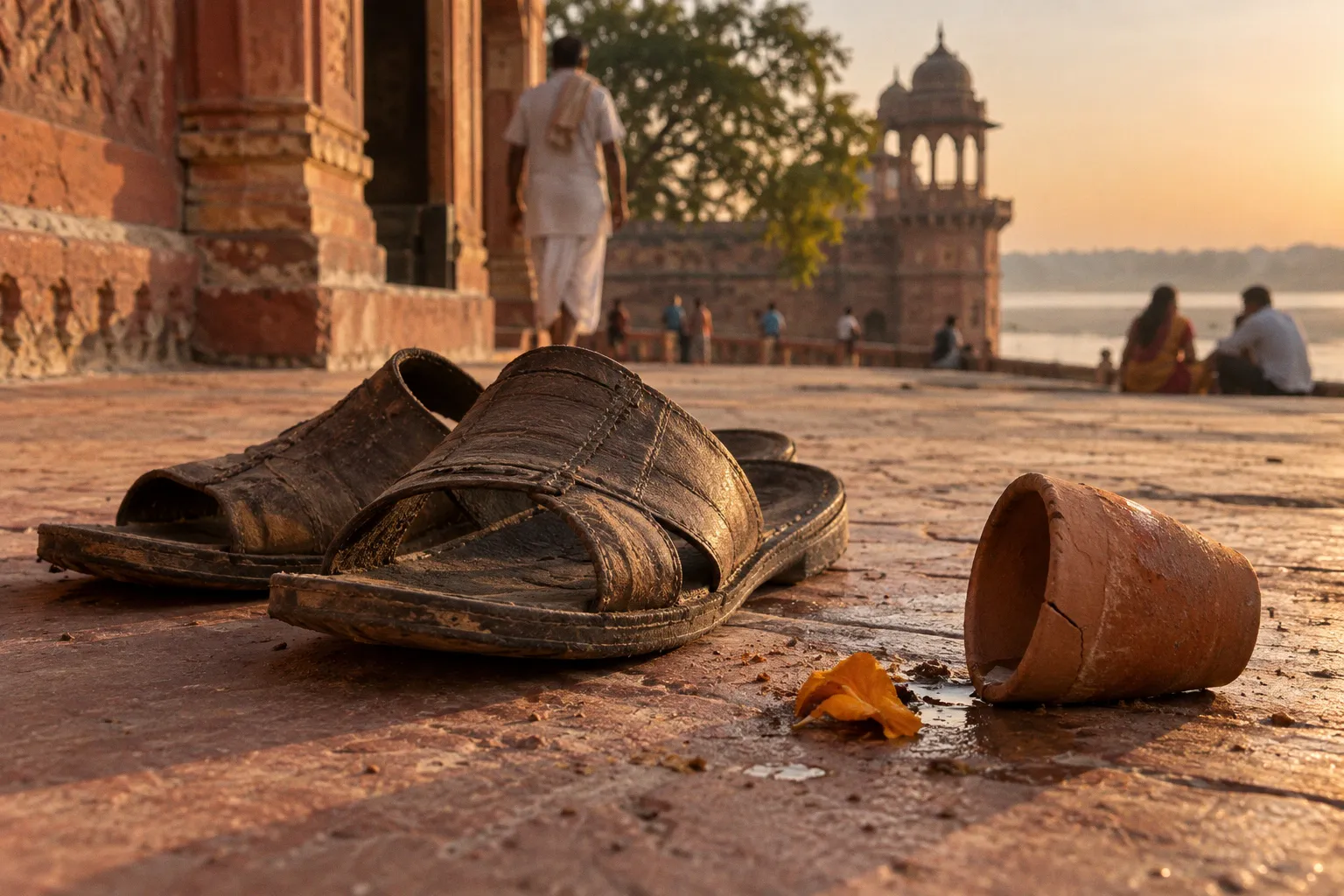
A Varanasi street food tour can be one of the clearest ways to understand how the city eats: breakfast kachori with a sharp vegetable curry, tamatar chaat built from mashed potatoes and spices, jalebi lifted from hot syrup, and lassi served in the busy lanes near the river. But the price shown at the beginning of a food walk is not always the price you will pay, and the most attractive-looking stall is not necessarily the safest one.
The central difficulty is not that Banaras street food is uniformly unhygienic, nor that every guide approaching visitors is dishonest. The difficulty is that the old city contains several overlapping economies: family-run food stalls, informal brokers, licensed guides, boat operators, shop commissions, and third-party booking platforms. Once you understand how those economies work, you can enjoy the culinary heritage of Varanasi with more confidence and much less negotiation fatigue.
The economics of Varanasi street food tours
A structured local food walk in Varanasi commonly costs between ₹2,200 and ₹4,000 per person, depending on the size of the group, the duration, and what the operator includes. Private local packages may be listed around ₹2,499 to ₹2,999, while international booking platforms can show prices above $124 for a premium or highly packaged experience.
These figures are not automatically unreasonable. A serious culinary tour may include a trained guide, advance coordination with several vendors, tastings, transport across difficult lanes, and the time required to explain the cultural significance of each dish. The guide is not simply taking you from one snack counter to another. They may be translating menus, managing a group through dense lanes, identifying the lineage of a family business, and helping visitors understand distinctions that are invisible at first glance.
The concern begins when the price is presented without a clear description of what it covers.
A food walk advertised as lasting five hours and including six to eight tastings is a different product from a casual ninety-minute stroll with two stops. A private tour is different from a shared group walk. A tour that includes a boat ride, aarti viewing, hotel transfers, or a meal at a seated restaurant will naturally have another cost structure. The problem is not variation in price; it is the absence of an agreed scope.
Before paying, ask for four details in plain language:
- the total price per person or per group;
- the expected duration and meeting point;
- the number and type of tastings included;
- any separate charges for boats, temple access, transport, drinks, or restaurant meals.
You do not need to bargain aggressively. A calm request for the complete itinerary is often enough to reveal whether the person offering the walk has a real plan or is improvising a sales pitch.
What a quoted price may include
| Type of experience | Typical structure | Where confusion often begins |
|---|---|---|
| Informal tip-based walk | A local person accompanies visitors and expects a discretionary payment | “Free” may later become a demanded guide fee |
| Structured local group tour | A planned route with several tastings, often lasting about 1.5 to 5 hours | The number of tastings or drink inclusions may be unclear |
| Private local food walk | A guide or small operator arranges an individual route | Extra charges may appear for transport or additional participants |
| Premium platform listing | A heavily packaged experience sold through an international booking site | The higher price may reflect platform fees, transfers, or branding rather than more food |
| Food-and-boat experience | Culinary stops combined with a river ride or aarti viewing | Boat duration, route, and add-ons may not be specified |
The most useful comparison is not simply the cheapest price against the most expensive one. It is the relationship between price, time, food, interpretation, and logistics. If two tours cost almost the same, one may include a carefully explained route through Vishwanath Gali and Kachori Gali while the other spends much of the afternoon moving visitors between commissioned shops. The name of the experience tells you less than its actual sequence.
A fair food tour does not need to be the cheapest option; it needs to make the exchange visible before you commit.
How the unlicensed touting system works
Visitors are often approached near temple lanes, hotel districts, railway approaches, and the ghats by people offering a “free” or very inexpensive walking tour. Some may simply be informal local guides trying to find work. Others may be connected to shops or operators who pay commissions for bringing tourists. The danger lies in accepting a vague offer before establishing who is responsible for the tour and what you are agreeing to purchase.
A common pattern begins with a low-friction invitation: a short walk, a local food stop, or a free introduction to the old city. Once the visitor is away from the original meeting point, the terms may change. The guide may request a fee for their time, direct the group to shops where purchases are strongly encouraged, or suggest that the original walk does not include the foods the visitor expected.
This does not mean that every person who approaches you is running a scam. It does mean that a visitor should not treat an unsolicited offer as equivalent to a booked tour with a defined itinerary.
There are several signals that deserve caution:
1. The price is described as free, symbolic, or negotiable without any explanation of the payment model. A tip-based walk can be legitimate, but the expected range and the end-of-tour arrangement should be clear.
2. The guide refuses to name the route or the food stops. A little flexibility is normal, particularly when stalls are busy, but complete vagueness leaves room for pressure later.
3. The offer quickly shifts from food to shopping. A silk showroom, spice shop, jewellery store, or religious article seller may be part of a commission route rather than a culinary route.
4. The guide insists that payment must be made immediately in cash. This is not proof of wrongdoing, but it removes the opportunity to compare the offer with other options.
5. The person claims exclusive access or special authority without explaining their role. Genuine cultural interpretation does not require theatrical claims.
6. The group is separated from its original meeting point before the price is agreed. Keep control of your route until the basic terms are settled.
A reliable guide should be able to tell you, in ordinary language, where you are going, how long the walk will last, what you will taste, and what you will pay. They should also accept a refusal without turning the exchange into a confrontation.
The etiquette of saying no
In Varanasi’s crowded lanes, visitors can feel that declining an offer is impolite. It is not. You may thank the person, say that you already have a booking, and continue walking. You do not owe a stranger a detailed explanation of your budget, hotel, nationality, or travel schedule.
If you are travelling with family or a small group, agree beforehand that one person will handle offers and payments. This avoids the familiar situation in which one person has accepted a walk, another has asked for a boat ride, and a third has already bought something from a shop before anyone has established the total cost.
The most respectful exchange is also the clearest one: ask first, decide second, move third.
Food safety in Varanasi’s old-city alleys
The lanes around Vishwanath Gali and Kachori Gali are not controlled dining rooms. They are working streets where food is prepared in small spaces, often at speed, with ingredients moving between storage, cooking, serving, and payment. Their charm comes partly from this immediacy, but the same informality creates uneven conditions.
A study examining 20 street food vendors and 50 household women in Varanasi found significant gaps in the implementation of food safety protocols, despite general awareness among vendors. That distinction matters. Knowledge that food safety is important does not always translate into reliable handwashing, protected storage, clean serving utensils, or separation between cash handling and ready-to-eat food.
At the same time, it would be inaccurate to label all street food in the city unsafe. Hygiene is variable, and it must be assessed stall by stall, dish by dish, and sometimes hour by hour.
When you are choosing where to eat, look for practical signs rather than polished appearances:
- A busy stall with steady local custom may indicate freshness and rapid turnover, although popularity alone is not a guarantee.
- Food cooked thoroughly and served hot is generally a more cautious choice than a prepared item sitting uncovered for a long period.
- Ingredients should be protected from dust, insects, and unnecessary handling.
- Serving spoons, plates, and glasses should appear to move through a consistent cleaning routine.
- The person handling money should not repeatedly touch ready-to-eat food with the same unwashed hands.
- Water used for drinks, ice, or washing should be treated with care; when you cannot establish its source, choose sealed bottled water and avoid uncertain ice.
- Chutneys, dairy, cut fruit, and raw garnishes deserve more attention because they may be handled after cooking.
These are not rules for judging a vendor’s character. They are observations about exposure and turnover. A stall can be modest and well managed; another can look attractive while leaving cooked food uncovered.
Dish-specific decisions
The dishes most associated with a Varanasi culinary tour do not carry exactly the same practical considerations.
Kachori-sabzi is often assembled from hot fried pastry and a cooked vegetable preparation. The safer choice is a serving that is clearly being produced and replenished rather than one that has been waiting in a tray.
Tamatar chaat may combine cooked potatoes with chutneys, spices, onions, coriander, and other garnishes. The dish is part of the city’s street-food identity, but the freshness of the uncooked additions matters.
Jalebi is fried and then placed in syrup, usually in front of customers. Observe whether the batch is moving quickly and whether the serving utensil is kept separate from money handling.
Lassi requires particular attention to the cleanliness of the vessel, the source of the dairy, and whether ice or water is added. A sealed bottled drink may be the more prudent choice if the conditions are uncertain.
Malaiyo, a light seasonal milk foam associated with winter mornings, is valued for its delicate texture and limited availability. Because it is a dairy preparation, temperature and handling deserve more attention than the romance of finding a rare seasonal dish.
The point is not to turn a food walk into an inspection exercise. It is to recognise that cultural participation includes observance: you watch how the food is made, ask a simple question when necessary, and make a decision that suits your own health needs.
In the old city, hygiene is not a single verdict on a neighbourhood; it is a sequence of small observations at each stall.
If you have a sensitive stomach, a relevant medical condition, or a history of food-borne illness, you can still explore the food culture of Banaras while choosing smaller portions, hot cooked dishes, sealed water, and a slower pace. A good guide should accommodate this without making you feel that you are failing at the experience.
Boat rides, aarti packages, and hidden add-ons
Riverfront food tours often sound especially appealing because they combine the city’s culinary traditions with the ghats and the evening observance of Ganga Aarti. Yet the boat element is where pricing can become least transparent.
Unscrupulous operators may advertise a low starting figure and then add charges for a longer route, extra passengers, special seating, waiting time, or a closer approach to a particular ghat. In other cases, the promised duration is shortened once the boat is on the river. If the boat is bundled with a food walk, it may be difficult to identify which part of the payment belongs to the guide, the food, and the boat operator.
Before boarding, confirm:
- the total price for the boat, not only the per-person starting rate;
- the duration of the ride;
- the ghats or route included;
- whether waiting for an evening ceremony is charged separately;
- whether food and drinks are included on the boat or only at land-based stops;
- the number of people sharing the boat.
It is sensible to agree on these details at the ghat, before departure, and to repeat them if another operator takes over. Keep a note of the agreed amount on your phone. This is not distrust for its own sake; it is a way of preventing a verbal arrangement from becoming unclear in the noise and movement of the riverfront.
The significance of Ganga Aarti is also easily reduced when it is sold as a spectacle attached to a package. You may be observing a ritual with its own discipline, participants, and devotional meaning, not simply attending a performance staged for visitors. A responsible guide will explain where visitors may stand, when movement is disruptive, and how photography should be approached.
Food should not be placed in the same category as the ritual itself. It is possible to enjoy a culinary walk and later attend the aarti, but a bundled itinerary should not encourage hurried eating, loud conversation, or intrusive movement during the observance.
Choosing a genuine and safer culinary tour
The strongest protection against inflated pricing and hygiene problems is not a perfect ranking of the best chaat spots in Varanasi. It is a clear booking process and a guide who treats the visitor as a participant rather than a commission.
Look for an operator who provides a named meeting point, a realistic duration, and a route that makes sense geographically. The old city’s lanes are dense, and a food tour that promises too many distant stops in a short period may be spending more time in transport and persuasion than in eating. A route through Vishwanath Gali and Kachori Gali can already provide substantial culinary variety without needing a long list of unrelated shops.
A useful enquiry before booking might cover the following:
- Is this a shared or private walk?
- How many tastings are included?
- Are drinks, bottled water, and dessert included?
- Will the group enter any shops?
- Are there any commissions or recommended purchases?
- Is a boat ride part of the booking, and if so, what are its exact terms?
- Can the guide adjust the route for dietary restrictions or a sensitive stomach?
- What happens if a vendor is closed or too crowded?
You do not need elaborate answers to every question. You need answers that remain consistent. If the written description says three hours and the person selling it says five, resolve that difference before paying. If the tour listing promises six to eight tastings but the guide describes only two, ask which description is current.
A practical way to structure the day
A first food walk is usually more comfortable when scheduled away from the most crowded ritual periods. An early route can suit kachori, lassi, and seasonal morning foods, while an evening walk may focus on chaat and sweets but coincide with heavier crowds near the ghats. Leave room between the tour and any important temple visit or river ceremony. Eating quickly, crossing the city under pressure, and arriving late to an observance serves neither the food nor the ritual.
Start with small portions. This is both a health precaution and a better way to taste the city’s range. A tour that moves from savoury snacks to dairy, sweets, and spicy chutneys can become physically demanding when every serving is treated as a full meal.
Carry hand sanitiser, but do not assume that it solves every concern. It cannot make uncertain water safe, and it does not replace attention to the preparation of the food. Likewise, a crowded stall is not automatically dangerous, and an empty stall is not automatically clean. We are reading conditions, not assigning moral labels.
The deeper value of a food walk
Street food in Varanasi is not separate from the city’s social and ritual life. The timing of breakfast, the seasonal appearance of malaiyo, the preparation of sweets, the movement of pilgrims through temple lanes, and the practical work of vendors all form part of the city’s living heritage. A culinary tour becomes meaningful when it explains these relationships rather than treating each dish as a photographable object.
That is why interpretation matters. A guide who can explain the difference between a daily snack and a festival food, or describe how a family stall has maintained its working lineage, offers something beyond a list of stops. They help you understand etiquette: where to stand, how to order, whether shoes must be removed, when photography is intrusive, and how to avoid blocking a narrow lane while eating.
The same principle applies to hygiene. The guide should not make exaggerated claims that all local food is dangerous or that one expensive venue is automatically superior. They should help you make informed choices, acknowledge uncertainty, and direct you toward vendors whose preparation is visible and whose turnover is steady.
A respectful visitor also contributes to the food culture by paying the agreed amount, avoiding waste, and not treating workers as part of the scenery. Ask before photographing people, especially vendors preparing food or families eating together. If you cannot finish a portion, say so early rather than accepting more food simply because it is included in the package.
A clear route through the risks
The safest and most rewarding approach to Varanasi street food tours is neither suspicion of every local interaction nor unquestioning trust in every polished booking page. It is deliberate participation.
Book or agree on the price before leaving the meeting point. Establish what the tour includes and whether the boat, aarti, transport, and drinks are separate. Watch the preparation of food without turning the vendor into an object of inspection. Choose hot, freshly turned-over dishes when possible, and be cautious with uncertain water, ice, dairy, and exposed garnishes. Give yourself time to eat slowly and to observe the etiquette of the lanes.
Most of all, remember that the quality of a food walk is measured by more than the number of tastings. A worthwhile guide makes the city more legible: its culinary lineage, its working streets, its ritual boundaries, and its ordinary acts of hospitality. When the exchange is transparent, the food is handled with care, and the visitor understands how to move respectfully through the neighbourhood, a street food tour becomes what it should be—a grounded introduction to Banaras, not a hurried trail of purchases and surprises.