Street food in Varanasi: practical safety tips for travelers
The first plate of kachori sabzi you eat in Varanasi will probably teach you more about the city than any guidebook.
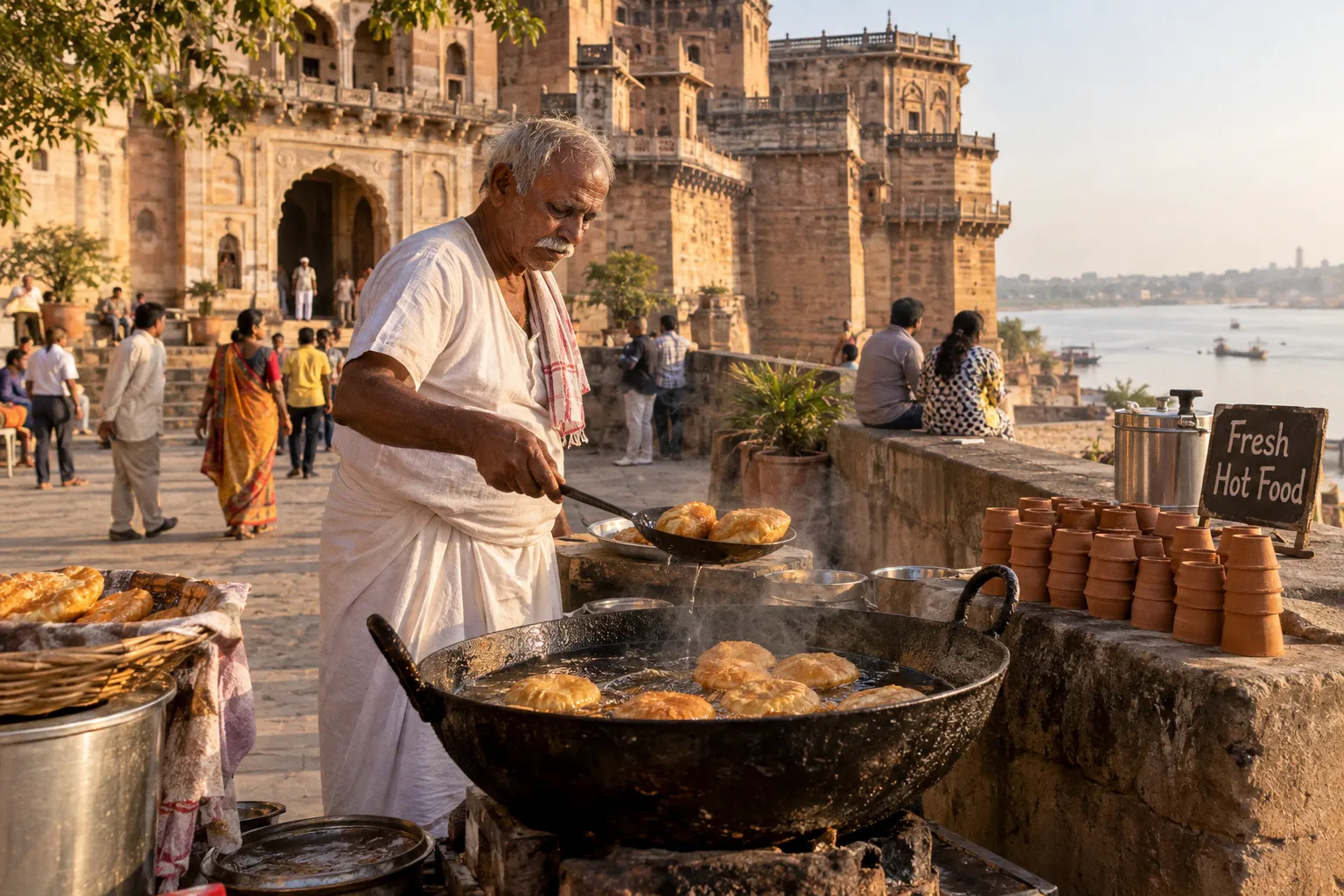
The puffed, golden shell arrives split open and filled with spiced lentils, then covered with a thin potato curry scented with cumin, ginger, and asafoetida. The question of whether you should eat it at all is usually the wrong question.
The better question is where it was cooked, how quickly it is moving, what has been handled alongside it, and whether the vendor appears to understand the rhythm of the food they are serving. Thousands of Banarasis eat street food every morning, often from the same stalls and lanes. Travelers who get sick are not always the people making obviously reckless choices. More often, they are the people who have not yet learned which small details matter.
This is the useful distinction: you do not need to avoid street food in Kashi, but you do need to read it. These are the practical banarasi street food hygiene tips for tourists that make it possible to enjoy the city’s food without treating every stall as either perfectly safe or automatically dangerous.
The Golden Rules of Banarasi Street Food Hygiene
Varanasi’s street food is not a reckless gamble. It is a system with its own logic, and like most systems, it rewards attention. The risks are not distributed evenly across every dish or vendor. They tend to gather around familiar weak points: food held at the wrong temperature, ingredients prepared too far in advance, questionable water, poor hand hygiene, and stalls where almost nothing is moving.
The oldest food businesses have one practical advantage: turnover. A kachori shop that has been frying for generations survives by selling food quickly. Fresh batches arrive, customers take them away, and ingredients do not need to sit around waiting for an occasional order. High demand does not guarantee perfect hygiene, but it is a useful sign when combined with clean handling and food that is cooked in front of you.
That is why a busy stall can be a better choice than an immaculate-looking but empty one. The crowd tells you that the food is being made repeatedly and consumed soon after. It also gives you the chance to see the operation before you commit.
In Banaras, freshness is not a marketing claim; it is the only economic model a high-turnover stall can afford to run on.
Observation is the first habit to acquire. Before ordering, spend a few seconds watching the vendor rather than staring only at the menu or the food. Look at:
- Whether cooked food is being served hot or left uncovered for long periods.
- Whether raw ingredients are kept apart from ready-to-eat food.
- Whether the serving utensils look reasonably clean.
- Whether the vendor handles cash and food in succession without any attempt to keep the two tasks separate.
- Whether flies are gathering on sweets, chutneys, cut fruit, or other exposed ingredients.
- Whether the cooking oil looks reasonably clear for the type of food being prepared, rather than excessively dark or full of burnt residue.
- Whether the stall is busy enough for prepared food to move quickly.
None of these observations is a laboratory test. They are practical signals. One imperfect detail does not automatically make a stall unsafe, especially in a crowded old-city lane where space is limited. But several warning signs appearing together are a good reason to keep walking.
Mastering the “Hot, Busy, Peeled” Strategy for Vendors
If you remember only three words from this guide, remember hot, busy, peeled. It is not a formal rule or an official certification. It is a simple way to make decisions quickly when you are standing in front of a crowded cart or a narrow shop with no obvious English-language information.
Hot
Choose food that is cooked to order or served immediately after cooking. Heat is not a complete guarantee of safety, but freshly cooked food is generally a better choice than food that has been sitting at room temperature. Kachori coming straight from the fryer, curry ladled from a hot pot, or chai poured from a boiling pan all have a clear advantage over lukewarm food that has been waiting on a tray.
Be cautious with items that have been pre-fried and are being reheated repeatedly, particularly if the stall is quiet. Avoid food that should be hot but feels merely warm. A dish can look appealing under a glass cover and still have been sitting there longer than you would want.
The best moment for many Banarasi dishes is immediate: the kachori is still crisp, the curry is hot, the jalebi has just come out of the syrup, and the chaat has not yet lost its contrast of textures. Eating promptly is part of both the culinary experience and the practical precaution.
Busy
A queue of local customers is one of the most useful signals available to a traveler. It suggests that the food is popular, the batches are turning over, and the stall has an established rhythm. It does not prove that every process is perfect, but it is stronger evidence than an empty counter with food displayed for an unknown length of time.
Pay attention to the type of crowd as well as its size. A stall serving local residents, shopkeepers, students, or families is giving you more information than a stall surrounded only by visitors who have all arrived at once. At breakfast time, an empty kachori shop deserves a closer look. It may simply be between batches, but it may also be selling food that has been waiting.
A busy stall can still have poor practices, so do not turn the queue into a guarantee. Use it with the other two parts of the strategy.
Peeled
For fruit, choose items you can peel yourself, such as bananas or oranges. Be more cautious with pre-cut fruit, raw salad, sliced cucumber, and other ready-to-eat produce that has been handled before you arrive. The concern is not the fruit itself but the chain of handling: washing water, cutting surfaces, knives, hands, and the length of time the food has been exposed.
Guava and similar fruit can be a good choice when the vendor cuts it in front of you and you can see the preparation. If the fruit has already been sliced and arranged on a tray, it has lost one of the advantages of being freshly prepared. Raw sprouts and leafy salads deserve the same caution.
“Peeled” is therefore a useful shorthand, not a command to reject every uncooked ingredient. The more handling a food has received before you eat it, the more important the conditions around that handling become.
| Signal | What it may tell you | Practical response |
|---|---|---|
| Food is cooked in front of you and served steaming | The batch is recent and moving quickly | Usually a positive sign |
| A long queue of local customers | High turnover and established demand | Observe the stall, then consider joining |
| Food is lukewarm or sitting uncovered | It may have been prepared too far in advance | Choose a fresh batch or another stall |
| Pre-cut fruit or raw salad is displayed | More handling and possible exposure to unsafe water | Prefer fruit you peel yourself or cooked food |
| Vendor moves between cash and food | There is a risk of cross-contamination | Look for serving utensils or a separate food handler |
| Oil is very dark, smoky, or full of burnt residue | The oil may have been used heavily or is poorly maintained | Choose another stall if the pattern is obvious |
| Flies are concentrated on exposed food | The food has been left vulnerable to contamination | Skip that item |
This simple framework makes the lanes easier to read. You do not need to inspect every surface or interrogate the vendor. You need to notice whether the stall is built around fresh turnover or around food waiting for someone to buy it.
Water Safety: Essential Precautions for Every Meal
Water is the point where otherwise sensible food choices can be undone. Travelers should avoid drinking tap water in Varanasi and should be careful with water used in ice, brushing teeth, and uncooked food preparation. This is not a question of whether local residents are accustomed to the water. It is a practical travel precaution: visitors cannot assume that water from an unfamiliar supply is suitable for them.
The safest routine is straightforward.
Drink sealed bottled water
Buy bottled water with an intact seal and inspect the cap before opening it. The plastic ring should be properly connected and should break when the bottle is opened. If the cap or ring looks loose, misaligned, or already disturbed, choose another bottle.
Keep the bottle with you when moving between temples, ghats, markets, and food lanes. A sealed bottle is especially important when you are thirsty and tempted to accept water from the nearest available source. Do not refill a single-use bottle from a tap unless you are using a reliable treatment method and know the quality of the source.
In hotels and guesthouses, bottled water should also be your default for drinking. The same applies in restaurants when the origin of table water is unclear.
Brush your teeth with bottled water
This is an easy precaution to forget because brushing does not feel like drinking. Keep a bottle beside the sink so that you do not automatically use tap water first thing in the morning. Spitting out the water does not eliminate every opportunity for exposure, particularly when rinsing the mouth or wetting the toothbrush.
Treat ice cautiously
Ice is only as reassuring as the water from which it was made. If you cannot establish that the ice came from purified water, skip it. This matters most with roadside drinks, coolers, and stalls where ice is handled repeatedly with bare hands.
A hot chai, lassi from a reputable busy shop, or another drink prepared in front of you may be easier to assess than a cold beverage filled with unknown ice. When the source is unclear, ordering the drink without ice is a simple compromise.
Be careful with chutneys and raw additions
Chutneys, sliced onions, coriander, and raw garnishes can vary widely in how they are prepared and stored. A freshly ground chutney served quickly from a busy stall is different from a container that has been standing open beside the road for hours. You do not need to reject every garnish, but you should be more selective when the stall is quiet or the ingredients look tired.
Water safety is not a reason to avoid local food. It is the foundation that makes the rest of your choices more reliable. Sealed bottled water, bottled water for brushing, and caution with ice will prevent many avoidable problems before you even reach the food.
Iconic Local Flavors and Where to Find Them Safely
Varanasi’s most recognizable dishes are woven into the city’s daily timetable. Morning belongs to kachori sabzi. Chaat appears as the day gathers pace. Tea stalls keep working through the afternoon and evening. Winter brings malaiyyo at a particular hour, when the weather still has enough cold in it for the delicate foam to hold.
The safest way to approach these foods is not to search for a perfect tourist-approved restaurant. It is to look for a stall where the dish is being made repeatedly, customers are arriving steadily, and the food is served quickly.
Kachori sabzi
Kachori sabzi is the breakfast that defines the city for many visitors. The crisp fried shell is split open and filled with spiced urad dal, then covered with a thin potato curry seasoned with cumin, ginger, and asafoetida.
The dish is at its best when the kachori is fresh from the fryer and the curry is hot. Eat it soon after serving rather than carrying it through the lanes. Around Thatheri Bazaar, the morning trade is particularly associated with old kachori shops, including Ram Bhandar. A queue is normal, and a short wait is preferable to choosing a quiet stall where the food has already been sitting.
The combination can be spicy, oily, and heavier than a traveler’s usual breakfast. Start with a modest portion if your stomach is not accustomed to rich food, and avoid adding every available chutney at once. The dish itself is not the problem; the timing, water, handling, and your own pace matter more.
Tamatar chaat
Tamatar chaat is especially associated with the lanes around Kashi Vishwanath and Godowlia. The base is a warm tomato mixture with a sweet and savory profile, roasted cumin, and other spices. Crisp fried puris are crushed into it at the last moment.
This is a dish to eat immediately. The puri should still provide texture against the hot base. If it has been assembled long before serving, the result becomes soft and less appealing, while the ingredients have had more time to sit exposed. Watch for a vendor who prepares each portion as customers order rather than keeping completed bowls on display.
Because chaat often includes several toppings and garnishes, it is worth observing the containers. Freshly handled ingredients, covered vessels, and steady turnover are all better signs than open bowls that appear neglected.
Jalebi
Jalebi is made by frying coils of batter and soaking them briefly in syrup. It should be glossy, hot, and crisp around the edges. Ram Bhandar is often mentioned by visitors looking for a traditional version, while smaller shops around Vishwanath Gali also serve the sweet.
The practical rule is simple: choose jalebi that is being fried or replenished regularly. A tray that has been sitting uncovered for a long time is less attractive than a fresh batch, especially in hot weather. Take only what you expect to eat, and avoid carrying syrup-soaked sweets around for hours.
Kulhad chai
Kulhad chai is served in a small unglazed terracotta cup. The cup contributes a faint earthy aroma and is intended as a disposable serving vessel. After drinking, treat it as disposable and follow the vendor’s disposal practice: leave it where the vendor indicates or hand it back if requested. Do not assume that it should be washed and reused.
The best tea stalls are usually easy to identify by their rhythm rather than by decoration. They have a regular stream of customers, tea is poured continuously, and the cups do not sit filled on a counter waiting for someone to claim them. If you are concerned about hygiene, watch how the tea is poured and whether the cup is taken directly from a clean supply.
| Dish | Where to look | What to watch for | Best time |
|---|---|---|---|
| Kachori sabzi | Thatheri Bazaar and established morning shops such as Ram Bhandar | Fresh frying, hot curry, steady local queue | Early morning |
| Tamatar chaat | Lanes around Kashi Vishwanath and Godowlia | Portion assembled to order, toppings covered or moving quickly | Late morning to afternoon |
| Jalebi | Ram Bhandar and sweet shops around Vishwanath Gali | Fresh coils, hot syrup, limited exposure | Morning through afternoon |
| Kulhad chai | Tea stalls across the old city | Continuous pouring, clean supply of disposable cups | Throughout the day |
Prices, portions, opening hours, and queues change with season and demand. Treat any price you are quoted locally as current information rather than assuming that an older guidebook figure still applies.
Seasonal Delicacies and Historical Culinary Landmarks
Some of Banaras’s most distinctive foods exist within a narrow seasonal or daily window. They reward planning, but they also require more attention because a dish served outside its ideal moment may have been prepared too early or held too long.
Malaiyyo in winter
Malaiyyo is a light milk foam flavored with saffron and cardamom. It is associated with cold winter mornings, generally from November through February, and is traditionally prepared by working with milk, sugar, spices, and the cool night air. The finished texture is delicate and airy, quite unlike the dense sweets found in most confectionery shops.
The lanes around Thatheri Bazaar are among the places where travelers look for it. Go early. As the morning warms, the foam loses its structure, and the short window for the dish closes. Choose a seller with a steady morning trade and containers that are covered or protected between servings.
Malaiyyo is not a food to buy casually and carry around all day. Its appeal lies in the texture and timing. Eat it soon after serving, use a clean spoon, and pay attention to how the vendor handles the bowl and garnish.
Thandai around Holi
Thandai is a chilled, spiced milk drink that may include almonds, fennel, rose petals, and other whole spices. Baba Thandai near Godowlia is one of the best-known names associated with the drink, and around Holi some vendors serve a version prepared with bhang.
Bhang thandai deserves particular caution. It is not simply a flavored beverage, and the effects can be delayed and stronger than a visitor expects. If you decide to try it, ask clearly which version you are receiving, do not combine it with alcohol or other intoxicants, and avoid taking more because the first serving seems mild. Have it in a safe setting, with people you trust, and leave yourself enough time for the effects to pass.
The broader food-safety point is the same as elsewhere: choose a busy, established vendor, make sure the drink is freshly prepared, and be clear about what is in the cup before you accept it.
Etiquette of the Street: How to Be a Respectful Eater
Eating street food in Varanasi is also a small social act. You are entering a working lane, not a staged performance arranged for visitors. A few habits make the experience easier for everyone.
Join the queue, even when it is informal. If customers are waiting along one side of the counter, follow their order rather than stepping directly toward the vendor. A stall may look chaotic to a visitor while operating according to a very clear local sequence.
Carry small notes when possible. Many stalls do not take cards, and asking a vendor to change a large note during a busy breakfast rush creates an unnecessary problem. Have payment ready, but do not place money on food surfaces.
Eat where the stall expects you to eat. Some vendors have a narrow counter, a standing area, or a designated place for used plates and cups. Kachori sabzi is generally eaten on the spot, while it is still hot, rather than carried across the lane to a bench.
For kulhad chai, treat the terracotta cup as disposable and follow the vendor’s disposal instructions. Leave it in the place provided or return it if the vendor asks you to do so. The important point is not to invent your own system of handling or assume that a disposable vessel is part of a washing cycle.
Photography also requires a little judgment. A quick photograph of your own plate after it has been served is usually unobtrusive. Holding a phone directly over the wok, blocking the counter, or filming a vendor’s hands while customers are waiting is not. If you want a closer picture of the preparation, ask first and be prepared to accept a refusal.
Eat what the city eats, where the city eats it, and at the pace the city eats it. That is the most useful guidebook you can carry.
A Practical Takeaway for Your Time in Kashi
You do not need to eat every meal on the street, and you do not need to prove anything by choosing the most crowded or most intimidating stall. You need a repeatable method.
Drink sealed bottled water and check the seal before opening it. Use bottled water for brushing your teeth. Skip ice when you cannot confirm its source. Prefer food that is cooked hot and served quickly. Look for busy stalls with steady local turnover, but still watch how the vendor handles cash, utensils, raw ingredients, and finished food. Choose fruit you can peel yourself, and be cautious with pre-cut produce, raw salads, and open chutneys.
Eat kachori sabzi while it is hot. Have tamatar chaat soon after it is assembled. Choose jalebi from a fresh batch. Treat kulhad as a disposable cup and follow the vendor’s disposal practice. In winter, go early for malaiyyo. Around Holi, make an informed decision about thandai and be especially careful with bhang versions.
The point is not to turn breakfast into an inspection. Street food in Varanasi should still feel immediate, generous, and a little unruly. But the city becomes much easier to eat in once you learn its signals. Fresh food moves quickly. Good stalls have a rhythm. Water deserves caution. A queue tells a story. A quiet tray of exposed food tells another.
The street food of Kashi is not a museum exhibit and it is not a dare. It is a daily practice, prepared and eaten in the same lanes through changing seasons and generations. Join it with attention, respect the pace of the people around you, and the meal becomes what it should be: one of the clearest ways to encounter Varanasi as a living city.