London Hosts First Traditional Ganga Aarti Ceremony on the Thames Riverbank
As Ratopati reports, the first-ever Ganga Aarti on the banks of the Thames ran on the evening of Sunday, September 13, staged near the Old Royal Naval College in Greenwich.
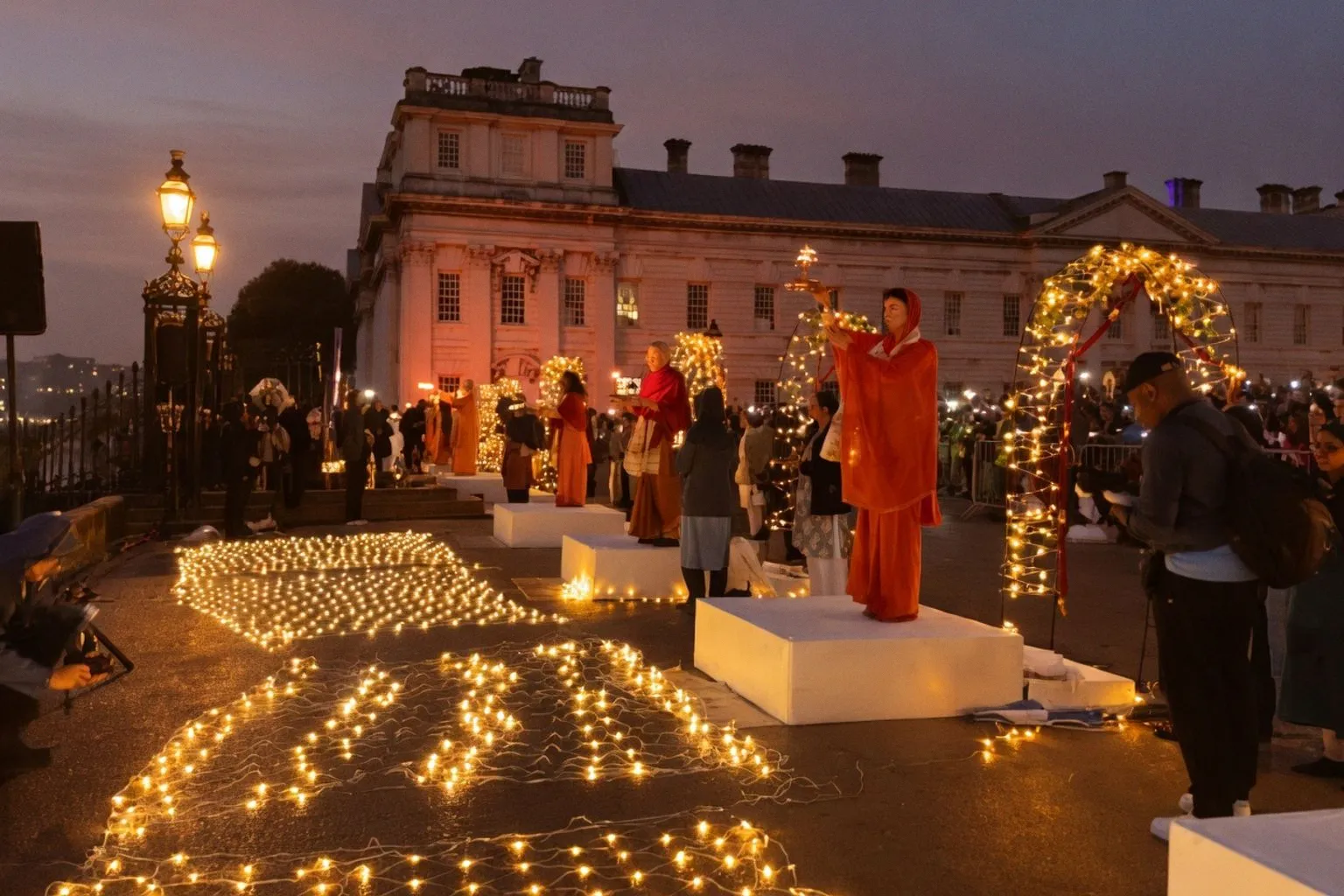
The ceremony was organized by Chinmaya Mission UK inside the annual Totally Thames festival, drawing thousands and following the Haridwar-Kashi format — Vedic mantras, conch shells, and large brass lamps. The headline is spectacle, but the operational detail matters more: every element of the ritual stayed on land.
How the ceremony ran
Crowd size was reported in the thousands. The site was the Thames riverbank outside the Old Royal Naval College, a fixed Greenwich landmark, which makes the location easy to verify on any map of the area. Chinmaya Mission UK staged the event inside the Totally Thames festival window — that's London's annual river-focused cultural run — and folded it into the mission's 75th anniversary programming. The format followed what pilgrims see at Har Ki Pauri and the Kashi ghats: the same call-and-response, the same lamp protocol, the same Har-Har Gange cadence. Chants and conch work the same on any riverbank. The variables are always the space, the crowd volume, and the rules of engagement with the water.
The land-only rule
This is the detail I'd flag first. No flowers, no idols, no offerings went into the Thames. The organizers explicitly cited river cleanliness and environmental protection as the reason for the land-only protocol. For anyone who knows how a Kashi aarti operates — where immersion is woven into the lived ritual, not optional — this is a meaningful departure, not a cosmetic tweak. The Thames version ran as a fire-and-light ceremony, not a water-offering ceremony. If you see coverage framing it as a one-to-one transplant of the Kashi model, treat that claim skeptically. The bones are Kashi; the water protocol is not.
What this signals for Kashi
Two practical points to track. First, the export template: a diaspora-organized aarti can replicate the form without replicating the immersion, which is a workable model if you're advising any community planning a riverfront event abroad in a regulated waterway. Second, the optics: when a London crowd in the thousands turns out for a Ganga Aarti, it confirms the ritual's pull outside the subcontinent, with downstream effects on heritage funding and visibility conversations in Varanasi itself. Watch for a post-event note from Chinmaya Mission UK or Totally Thames — that's where the real logistics will surface: permits secured, crowd flow managed, waste handling, and whether the format returns next year.