Questioning the Viral Claims of Ganga River Cleanup Efforts
According to The Better India, one person removed 250 kilograms of waste from the Ganga.
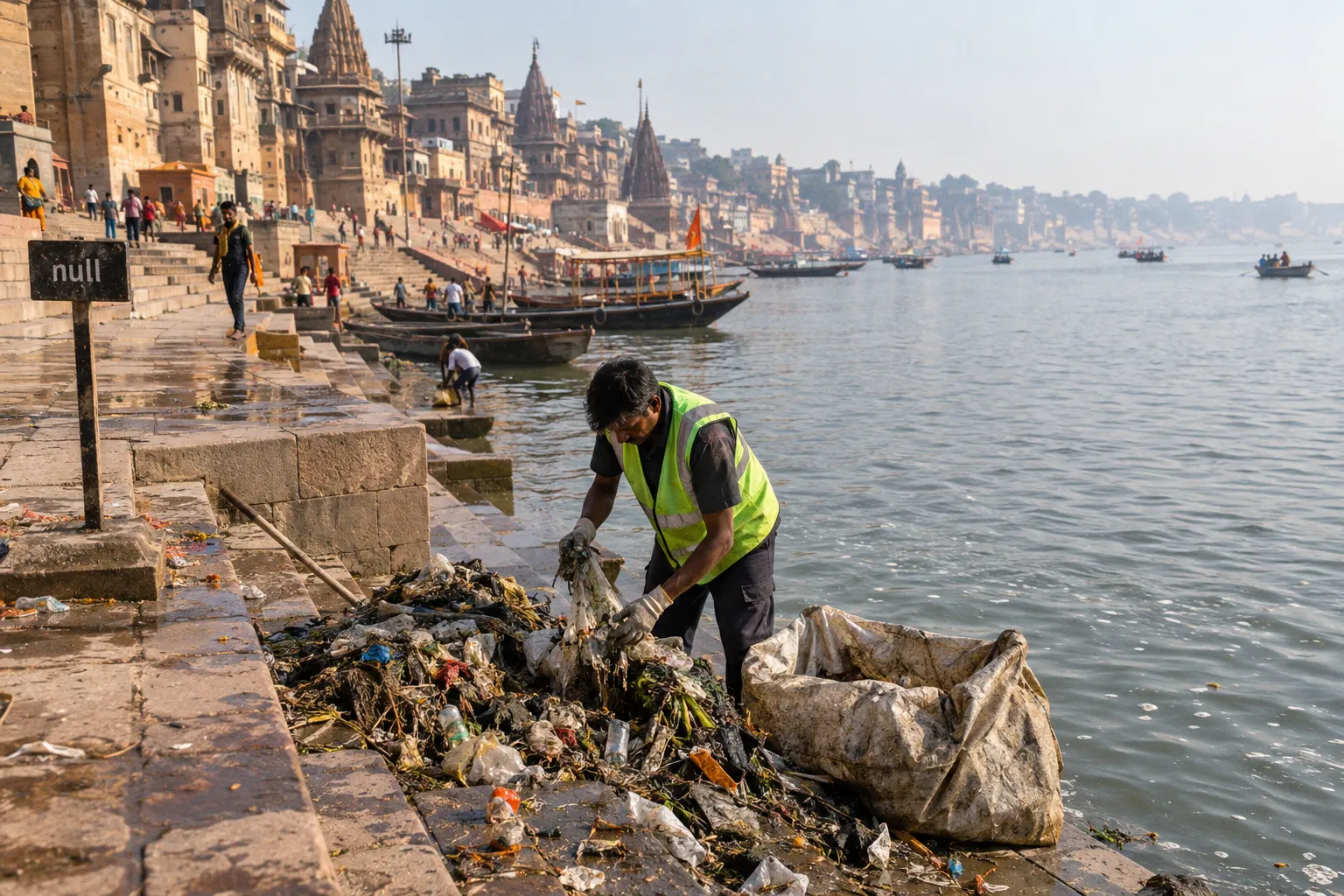
That is the central claim in the report, but the available source material provides no name, location, date of the cleanup, or explanation of how the waste was collected. For anyone planning time along Varanasi’s ghats, the useful takeaway is simple: treat this as a reported cleanup effort, not as proof that conditions have changed across the riverfront.
The headline is stronger than the available detail
The Better India item is identified by the headline “He Removed 250 Kg of Waste From the Ganga,” but its available snippet contains no supporting account beyond that claim. There is no confirmed information here about the specific ghat, the stretch of river involved, the type of waste removed, or whether the effort was part of a larger programme.
That gap matters. A precise number can make a cleanup sound broader than it may be. Until the underlying report supplies the missing details, I would not attach the figure to Varanasi as a whole, and I would not assume that one removal operation represents a measurable change along the city’s riverfront.
Use the headline as a signal, not a map.
The wider issue is moving toward delivery
A separate Deccan Herald report on IFAT India 2026 described a push for faster action on water and waste management. The event, held in Mumbai from September 9 to 11, brought together government agencies, urban local bodies, utilities, industry and technology providers, according to the report.
The discussion focused on turning policy into projects, with attention to water and wastewater treatment, reuse, digital monitoring, recycling, biogas and energy recovery. The event had more than 500 exhibitors from over 30 countries and attracted 20,118 business visitors, the report said.
That is useful context, but do not merge the two stories. The IFAT report does not confirm that the 250-kilogram removal was connected to the event, a government programme, or any particular technology. It only shows that water and waste management are being discussed through a broader, implementation-focused lens.
For visitors navigating the ghats, the distinction is practical. A single cleanup claim is an action. A city-wide improvement requires repeat operations, clear locations, measurable follow-up and public reporting. None of those additional details are confirmed in the available material.
What to check before drawing conclusions
If this story affects your riverfront plans, bypass assumptions and verify the basics:
- Find the exact location of the cleanup.
- Check whether the report identifies the person or organisation involved.
- Look for a collection date and a description of how the 250 kilograms was measured.
- Separate a one-time removal from an ongoing waste-management operation.
- Do not use the headline alone to judge conditions at a specific ghat.
The same rule applies when choosing where to spend time along the Ganga: match the claim to a place, a timeframe and a documented action. If those three pieces are missing, keep the conclusion narrow. One reported cleanup is worth noting—but it is not a riverfront-wide result.