High-Speed Rail and New Elevated Corridors Set to Transform Varanasi Connectivity
As NDTV reports, India's Ministry of Railways has published proposed travel-time blueprints for high-speed rail corridors, with the Delhi-to-Varanasi route targeted at 3 hours 50 minutes.
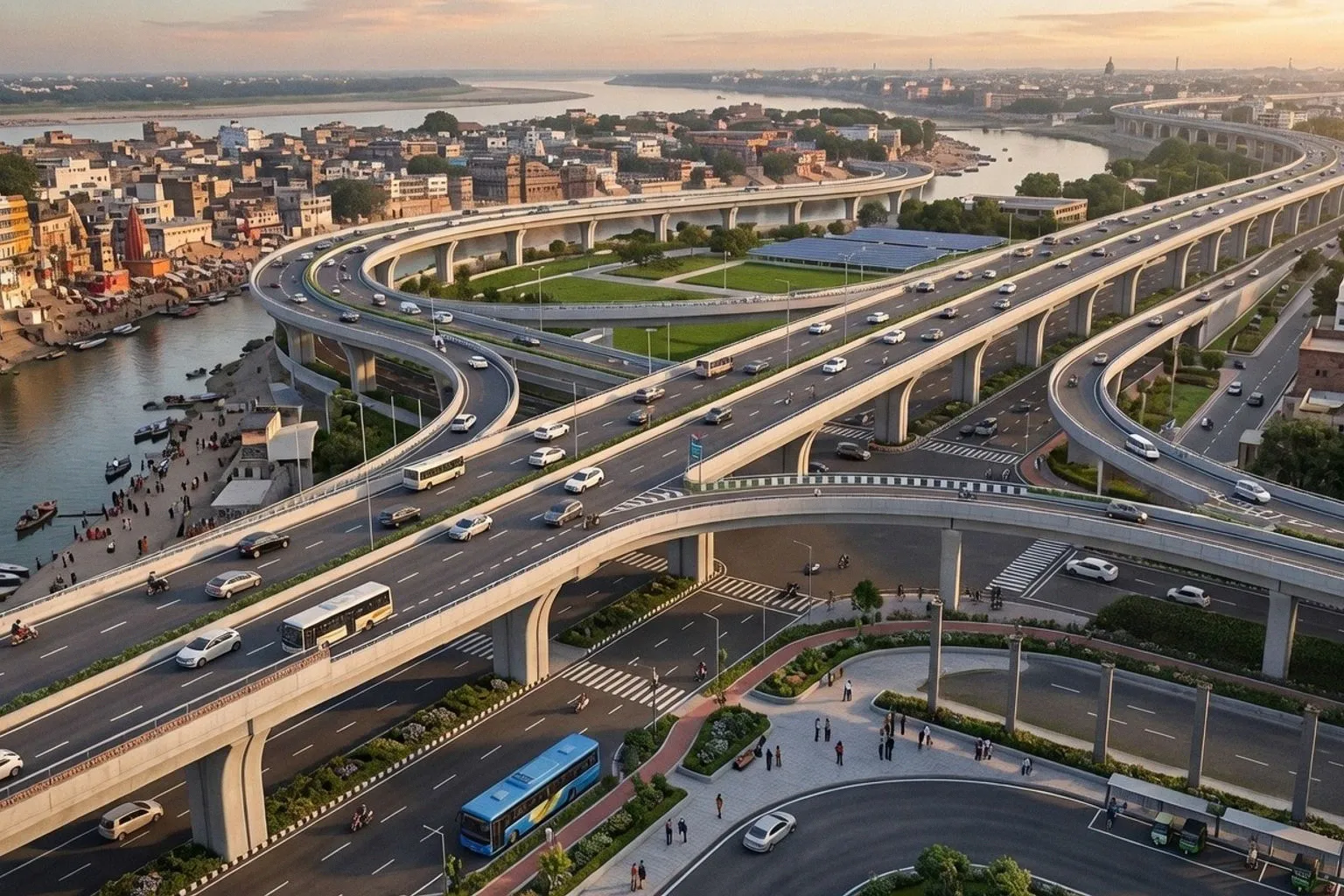
The plan also outlines a Varanasi-Patna-Siliguri high-speed link designed to bring Siliguri within three hours of Kashi. For a city organized around the Ganga and its ghats, the prospect of compressed travel times from the national capital reshapes the spatial relationship between Varanasi and the wider Indo-Gangetic corridor.
The Rail Blueprint
According to the Ministry of Railways figures cited by NDTV, the Delhi-to-Varanasi high-speed corridor is engineered to reduce the journey to under four hours. The companion Varanasi-Patna-Siliguri line extends the network eastward, anchoring Varanasi as a junction between the northern plains and the northeastern frontier via Patna. The plan remains a blueprint: travel times are proposed targets rather than operating schedules. Station siting, alignment through the city's dense riverfront precincts, and integration with existing infrastructure at Kashi Railway Station and Varanasi Junction remain unspecified in the published documents.
The Varuna Corridor Parallel
On the road network, a parallel intervention is already in motion. DD India reports that the National Highways Authority of India is executing the 43.218-km Varuna Elevated Corridor, a ₹10,998-crore project approved by the Union Cabinet in July. The predominantly elevated 6/4-lane structure connects NH-31 with the Varanasi Ring Road along the Varuna River. Its components include flyovers, loops, ramps, service roads, an iconic cable-stayed bridge, and an extradosed foot over bridge-cum-major bridge.
Engineered for speeds of 80–100 kmph, the corridor is projected to cut the journey between NH-31 and Kashi Railway Station from approximately 40 minutes to 20 minutes. The alignment directly links five transport gateways: Varanasi Airport, Varanasi Cantonment, Varanasi City Railway Station, Kashi Railway Station, and Deen Dayal Upadhyaya Junction. Access to Ramnagar Port and the Sampurnanand Sanskrit University precinct is also strengthened. The project sits within the PM Gati Shakti National Master Plan and improves links to the Chandauli Socio-Economic Zone and six major logistics nodes.
What To Track
For travelers and city observers, the decisive variables are timing and routing. The high-speed rail plan specifies destinations, not station footprints; the Varuna corridor specifies alignment and cost, not delivery date. The intersection of these two projects—with the elevated road feeding rail terminals and the rail corridors moving passengers into and out of them—will determine whether Varanasi's access infrastructure matures before, alongside, or after its heritage tourism load. Current preservation efforts along the ghats and the Kashi Vishwanath Corridor remain outside the published footprint of either project, though both reshape the approach routes by which visitors reach the river.