One Student's Solo Mission to Clear India's Choked Rivers Goes Viral
According to Noticias Ambientales, 20-year-old Surendra Singh Choudhry — better known online as Bittu Tabahi — has turned his weekends into a solo cleanup operation on the Ajnar River and its…
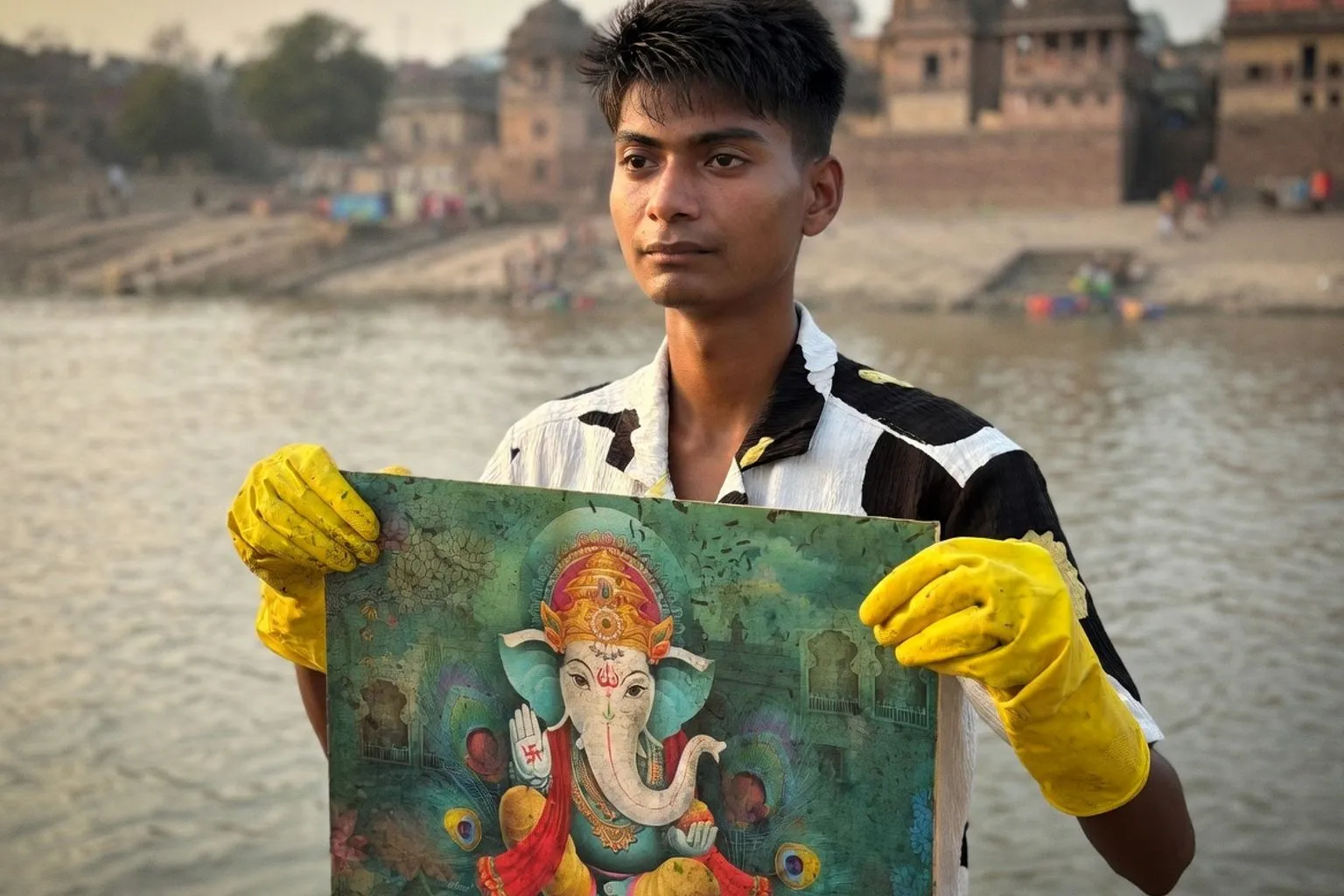
According to Noticias Ambientales, 20-year-old Surendra Singh Choudhry — better known online as Bittu Tabahi — has turned his weekends into a solo cleanup operation on the Ajnar River and its tributaries near Biaora in Madhya Pradesh's Rajgarh district. After his initial volunteer crew dropped off, the student kept going, funding the gloves, bags, and protective gear out of his own pocket and spending up to three months on a single stretch before moving to the next. His before-and-after footage has pulled in more than 300,000 followers on Instagram, turning a local act of manual labor into a viral case study of how broken India's river-maintenance chain really is.
What the footage shows
The clips run on the same pattern: plastics, bottles, weeds, and silt choking the channel, then hours of hauling until the flow partially recovers. Choudhry's persistence has reframed the conversation — when a single person with bags and gloves becomes the headline response to a polluted watercourse, the bottleneck sits somewhere above him. India's Central Pollution Control Board, cited in the same reporting, counts 296 severely polluted stretches across 271 rivers in 32 states and territories. Thirty-seven of those segments sit in the highest-danger tier, and eighteen of them are in Madhya Pradesh alone. That ratio puts the Ajnar at the median, not the edge.
Why this lands beyond Madhya Pradesh
Cleanup without source-level controls just resets the clock. Effluent treatment, waste-management infrastructure, and permanent monitoring are the actual levers — and they're the ones missing from most of the stretches on that CPCB list. Prime Minister Narendra Modi's address at an environmental conference in New Delhi this week, carried by PM India, leaned on renewable-energy gains and per-capita emissions framing; the polluted-stretches ledger didn't feature. For anyone living along or working the Ganga corridor, the practical rule is plain: a viral cleanup is a signal, not a solution. Track what your local stretch looks like before and after the monsoon, and watch whether the municipal machinery follows the camera or stays missing.